Frame by Frame: Why a Two-Second Blur in a Viral Clip Can Send 10,000 Strangers Into Full Detective Mode
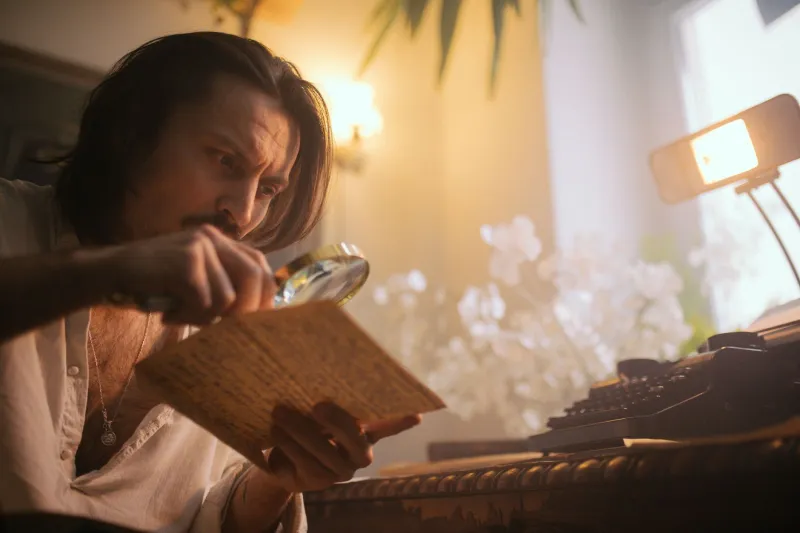
It starts innocently enough. Someone posts a clip of their cat knocking a glass off a counter. Fifteen seconds, maybe less. Cute, relatable, done. Except—wait. Is that a shadow in the hallway behind the bookshelf? Is the clock on the wall showing a time that doesn't match the daylight coming through the window? And why does the audio cut out for exactly 0.3 seconds at the eight-second mark?
Congratulations. You've just stumbled into the rabbit hole. Population: everyone with Wi-Fi and too much confidence in their own deductive reasoning.
The internet's appetite for mystery has found its perfect feeding ground in short-form video. The shorter the clip, it turns out, the bigger the conspiracy.
Your Brain Hates a Cliffhanger (And Will Absolutely Embarrass Itself Trying to Fix That)
Cognitive psychologists have a term for what happens when your brain encounters incomplete information: the Zeigarnik Effect. Named after Soviet psychologist Bluma Zeigarnik, it describes the very human tendency to obsess over unfinished tasks or unresolved narratives far more intensely than completed ones. Short-form video, almost by definition, is all unresolved narrative. You get a fragment. A slice. A blip.
And your brain, bless its anxious little heart, cannot let that go.
"The shorter the clip, the more gaps the brain has to fill in," explains the general consensus among behavioral researchers who study media consumption. When a 90-minute movie leaves something ambiguous, you have hours of context to lean on. When a 12-second video leaves something ambiguous, you have basically nothing—which means your imagination gets handed the wheel and immediately starts doing donuts in a parking lot.
This is the neurological engine powering what the internet has quietly turned into one of its most entertaining pastimes: crowdsourced clip forensics.
The Case of the Blinking Doorbell
In early 2023, a clip went modestly viral showing a woman doing a mundane home workout in her living room. Forty-seven seconds of jumping jacks and questionable form. Harmless. Except someone in the comments noticed that the smart doorbell light visible in the background blinked in what they described as "a pattern." Within 48 hours, a Reddit thread with over 3,000 comments had emerged, complete with frame-by-frame GIF breakdowns, Morse code analysis (it wasn't Morse code), and at least one person who had cross-referenced the blink timing with lunar cycles.
The creator eventually posted a follow-up clarifying that the doorbell had a firmware glitch. The thread kept going for another week.
This is not an isolated incident. It is, increasingly, just how the internet interacts with video content it finds even mildly curious.
Community as Co-Author
There's something else going on beyond pure neuroscience, though. Short-form platforms have accidentally engineered the perfect conditions for collective storytelling. Comment sections, duet features, stitches, quote-reposts—every tool on these platforms is essentially an invitation to respond, reinterpret, and add to the original clip's meaning.
When a video is ambiguous, that invitation becomes a calling. Viewers don't just watch the content—they become co-authors of whatever narrative gets constructed around it. And that participation carries genuine social rewards. Cracking the "mystery" first earns you clout. Posting the most compelling theory gets you engagement. Being the person who finds the frame that everyone missed? That's a whole moment.
Creators have noticed. Some are now deliberately engineering ambiguity into their content—leaving unexplained objects in frame, cutting audio at suspicious moments, wearing shirts with barely-legible text—specifically to trigger the detective instinct in their audience. It's less content creation and more puzzle design, and the engagement metrics are, reportedly, absurd.
The ARG That Wasn't (And the ARG That Absolutely Was)
Not every mystery clip is an accident, and not every one is a deliberate creator play either. Some exist in a genuinely weird middle space.
Alternate Reality Games—ARGs—have existed as a niche internet hobby for decades, using scattered digital breadcrumbs to lead participants through elaborate constructed narratives. Short-form platforms have become the newest ARG delivery mechanism, and the lines between intentional puzzle, accidental ambiguity, and outright hoax have never been blurrier.
In late 2022, a series of TikTok clips showing what appeared to be coded messages embedded in coffee shop background noise sent a corner of the internet into a genuine frenzy for about three weeks. Spectrograms were analyzed. Audio was slowed to 0.25x speed. A Discord server with over 800 members formed specifically to coordinate the investigation. The conclusion, eventually, was... inconclusive. Which, for the people involved, was somehow more satisfying than an answer would have been.
The journey, it turns out, is the whole point.
When the Theory Eats the Creator
There's a less charming side to all of this, naturally. When the internet decides a clip contains a mystery, the creator of that clip often becomes collateral damage in the investigation. People have had their locations identified from window reflections. Others have had years-old social media posts exhumed because someone in a thread decided they were "relevant context." One creator had to post a lengthy explanation video after a three-second audio glitch in one of her cooking clips spawned a theory that she was sending distress signals.
She was not sending distress signals. Her microphone had a loose connection.
The crowdsourced detective impulse is genuinely fascinating as a cultural and psychological phenomenon. It's also, when pointed at real humans rather than fictional puzzles, capable of getting pretty uncomfortable pretty fast. The same Zeigarnik-fueled compulsion that makes a mystery irresistible also makes it easy to forget there's an actual person at the center of the speculation.
The Fifteen-Second Mystery Machine Isn't Slowing Down
If anything, the clip-as-mystery-box dynamic is accelerating. Platforms are leaning harder into comment-section culture. AI tools are making it easier to slow footage down, enhance audio, and isolate background details that would have been invisible three years ago. And audiences, having spent years training themselves to consume content in tiny, rapid bursts, have somehow also developed the patience to spend hours dissecting a single fifteen-second moment.
Human brains contain multitudes. Mostly anxious, pattern-obsessed multitudes who will absolutely spend a Tuesday night running spectrogram analysis on a stranger's cat video.
The clip is short. The rabbit hole is not. And somewhere out there, a doorbell is blinking completely at random, completely unaware of the thread it's about to inspire.

