Oops, I Built a Company: The Accidental Entrepreneurs Who Posted a Clip and Ended Up With a Warehouse Full of Product
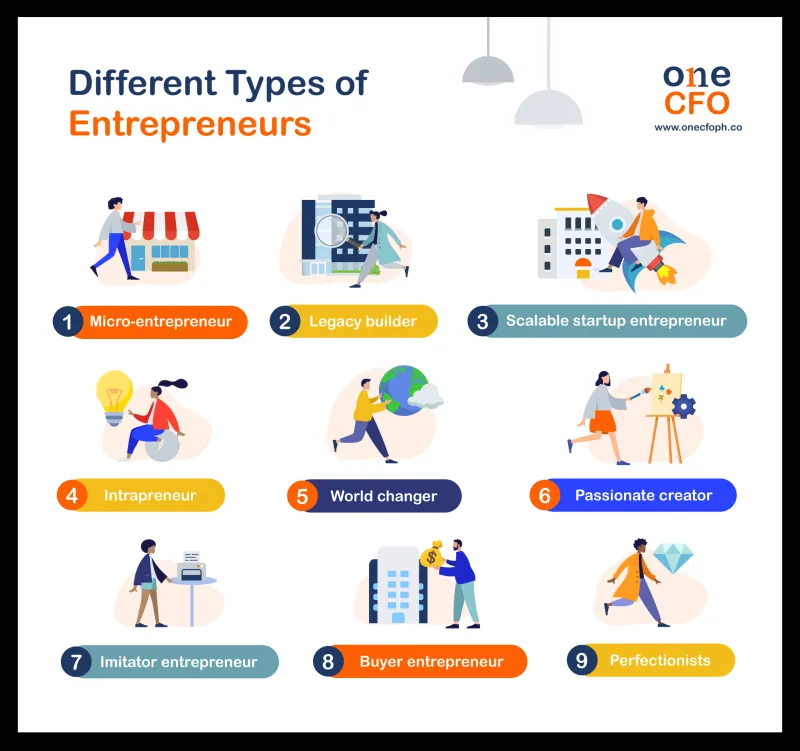
Photo: entrepreneur packing products home office startup small business, via onecfoph.co
Nobody wakes up and says, "I think I'll accidentally found a startup today." And yet, somewhere between filming a shaky demo video in a cramped apartment kitchen and watching a clip rack up 4 million views overnight, that is exactly what keeps happening to a very specific, very bewildered class of American content creator.
Call them the accidental entrepreneurs. They didn't write a business plan. They didn't pitch investors. They just posted something short, something real, something weirdly satisfying — and then the internet decided it needed to own that thing immediately.
The Anatomy of a 20-Second Business Plan
Here's how the story usually goes: A person discovers a problem, solves it in a clever or visually pleasing way, films themselves doing it, posts the clip without much thought, and wakes up the next morning to 47,000 comments that all say some variation of "TAKE MY MONEY."
It sounds like a fairy tale. It kind of is. It's also, depending on who you ask, an absolute logistical nightmare.
"I genuinely thought maybe a hundred people would see it," says Dani Kowalski, a home cook from Columbus, Ohio, who posted a clip last year demonstrating a collapsible herb-stripping tool she'd modified from a cheap kitchen gadget she bought at a dollar store. The clip — 22 seconds long, zero narration, just the satisfying sound of rosemary leaves cascading into a bowl — hit 6 million views in 72 hours. By the end of the week, her DMs were a disaster zone and her email inbox had essentially become a hostage situation.
"People were asking where to buy it. And I kept saying, 'I just... made it myself.' And they'd say, 'Okay but WHERE CAN I BUY IT.' Like the concept of it not existing as a product hadn't occurred to them."
Six months later, Dani had a manufacturer, a Shopify store, and a fulfillment center handling orders in three states. She also had approximately zero hours of sleep and a very patient partner who agreed to convert their guest bedroom into a temporary packaging facility. The business is now profitable. The guest bedroom is still not a guest bedroom.
When the Algorithm Becomes Your Angel Investor
The short-form video ecosystem has quietly become one of the most efficient product-market fit testing environments ever invented — and nobody really planned it that way. What used to require focus groups, prototype runs, and expensive market research can now be stress-tested in real time by millions of strangers who will tell you, loudly and immediately, whether they want the thing you're holding.
This is the part that traditional venture capitalists are only just beginning to fully appreciate. Viral engagement isn't just vanity metrics. It's demand signal. It's a pre-order queue that formed before the product even exists.
Marco Delgado, a beauty enthusiast from Miami, posted a clip of himself mixing a DIY tinted lip balm using ingredients he'd ordered off the internet out of sheer boredom. The clip — under 30 seconds, filmed on a phone propped against a cereal box — got picked up by several large beauty accounts and turned into what the internet calls a "sleeper viral." It didn't explode immediately. It just quietly accumulated 11 million views over about three weeks.
"The comments were like a business plan somebody else wrote for me," Marco says. "People were telling me what shades they wanted. What SPF level they needed. Whether they wanted it in a tube or a pot. I didn't ask any of those questions. They just... answered them anyway."
He launched a small-batch beauty brand eight months later. The first drop sold out in four hours. He now ships to 38 states and is negotiating his first retail partnership. He still films everything on the same phone.
The Gap Between Going Viral and Shipping Boxes Is a Very Deep Ditch
Here's the part of the story that the highlight reels tend to skip: the chaos that lives between "this clip is everywhere" and "we have a functioning supply chain."
Because going viral does not come with a tutorial. Nobody sends you a "Congratulations on Your Accidental Company" onboarding packet. You have to figure out manufacturing, pricing, shipping logistics, customer service, returns, taxes, and about forty other things — usually while also trying to keep posting content, because the moment you go quiet, the algorithm forgets you exist.
"It was the most exciting and most terrifying six months of my life," says Priya Nath, a Chicago-based teacher who posted a clip of a custom-designed homework organization tray she'd made for her classroom. Teachers across TikTok lost their collective minds. Within two weeks, she was fielding wholesale inquiries from school supply distributors.
"I was literally grading papers during the day and answering manufacturer emails at 11 PM. I had no idea what MOQ meant." (For the uninitiated: minimum order quantity. Priya learned fast.) She eventually partnered with a small US manufacturer and now sells her organizational systems to school districts directly. She still teaches. She is, by her own admission, "extremely tired and extremely grateful."
The New American Startup Story
There's something genuinely modern — and genuinely American — about this particular flavor of entrepreneurship. It skips the gatekeepers. It bypasses the traditional pitch deck. It rewards the person with the weird niche idea and the willingness to just show people instead of telling them.
The short-form clip has become a kind of democratic product launch pad, available to anyone with a phone and something interesting to demonstrate. The barriers to entry are low. The barriers to scaling, as every accidental entrepreneur will cheerfully tell you, are absolutely enormous and full of surprises.
But the origin story — the 20-second clip, the notification avalanche, the slow dawning realization that maybe this is actually a business — has become a distinctly BlipSnips-era phenomenon. Big ideas in tiny packages. Futures launched in under a minute.
Dani Kowalski, for her part, is philosophical about the whole thing. "I just wanted to show people a cool way to strip herbs," she says. "Now I have a SKU number. I don't fully know what that means yet, but I have one."
Somewhere out there, another clip is being filmed right now. Another kitchen gadget, another beauty hack, another classroom tool, another solution to a problem most people didn't know they had. And in about 72 hours, another accidental entrepreneur is going to check their notifications and realize their life just changed — 20 seconds at a time.