Thirty Seconds, One Stranger, Whole New Reason to Stay
There's a clip. It's eleven seconds long. A guy in a Steelers hoodie is standing in what appears to be a college dorm kitchen, delivering an absolutely unhinged monologue to a piece of burnt toast like it personally wronged him at prom. No production value. No ring light. The caption just says "monday." It has 4.2 million views.
And somewhere in Missouri, a 23-year-old named Dani watched it at the exact moment she needed to laugh more than she needed anything else in the world.
"I don't know why that specific clip," she told us. "I'd been scrolling for like an hour, just... not doing great. And then this random dude is yelling at toast and I just — I laughed. Like a real laugh. And I remembered that things could still be funny."
Dani's story isn't unique. It's not even rare. What's emerging from the scroll-and-swipe culture of short-form video is something no platform engineer designed, no brand strategist pitched, and no content creator planned: a distributed, accidental mental health infrastructure built entirely out of clips that were never supposed to matter.
The Algorithm Doesn't Know It's Doing Therapy
Let's be real — TikTok, Instagram Reels, and YouTube Shorts are not mental health platforms. They are attention-harvesting machines optimized for engagement, watch-through rates, and the sweet dopamine ping of a notification. The fact that they occasionally serve someone a clip that functions like a lifeline is, from a product perspective, basically a happy accident.
But those accidents are stacking up.
Researchers at the University of Southern California published findings in 2023 suggesting that parasocial relationships formed through repeated short-form content consumption can meaningfully reduce feelings of isolation — particularly in young adults aged 18 to 29. The clips don't have to be about mental health. They don't have to be inspirational. They just have to make someone feel like another human being exists on the other side of the screen.
Comedy, it turns out, is extraordinarily good at this. A well-timed absurdist bit creates what psychologists sometimes call "shared incongruity" — the brain registers that the world is weird and someone else noticed, which, if you've ever felt profoundly alone, is a genuinely moving experience.
The toast guy, whose real name is Marcus and who asked us not to use his last name, had no idea any of this was happening. "I was just mad about the toast," he said, laughing. "I make dumb videos when I'm bored. I didn't think anyone was watching."
When a Stranger's Symptom Description Saves Your Life
The mental health angle is only part of the story. Across the country, people are reporting something even more specific: medical diagnoses that started with a random clip.
Take Kevin, a 34-year-old HVAC technician from outside Atlanta. Two years ago he watched a video of a woman describing the "weird pressure behind her eye" that turned out to be a symptom of a serious neurological condition. Kevin recognized the description immediately. He'd been experiencing the same thing for months and had chalked it up to stress.
"I went to the doctor the next week. Turned out I had a thing going on with my optic nerve that could have gotten really bad," he said. "The doctor told me catching it when we did made a real difference. I found it because some woman was venting about her health journey in a 40-second clip."
This is happening in categories most people wouldn't expect. Clips about autoimmune disorders, rare skin conditions, cardiac arrhythmia symptoms, and even postpartum complications are functioning as accidental diagnostic tools — not because the creators are medical professionals, but because lived experience described casually and specifically can cut through the noise in ways that WebMD never could.
The irony is that these creators are often not trying to inform anyone. They're processing. They're venting. They're doing the very human thing of saying "this happened to me" into a camera because saying it out loud makes it feel more manageable. The fact that someone else recognizes themselves in that description is a byproduct, not a goal.
The Weight Creators Don't Know They're Carrying
Here's where it gets complicated, and honestly a little heavy for a platform that usually celebrates dancing dogs and chaotic cooking fails.
Creators who discover that their content has functioned as a lifeline for someone often describe a deeply disorienting emotional experience. On one hand, it's profoundly meaningful. On the other, it reframes every future piece of content through an impossible lens.
"Someone messaged me and said my video about not wanting to get out of bed helped them get through a really dark night," said Priya, a lifestyle creator based in Chicago with about 80,000 followers. "And I cried. I really cried. But then I was scared. Because now every time I post something, there's this little voice that says — what if someone needs this to be the right thing? What if I get it wrong?"
The parasocial weight that short-form platforms distribute across their creator communities is rarely acknowledged in conversations about the industry. We talk about burnout from posting schedules and algorithm anxiety and brand deal negotiations. We don't talk much about the emotional labor of accidentally becoming someone's reason to hang on.
Marcus, the toast guy, said something that's been rattling around our editorial team's heads since he said it: "I just want to be funny. I don't want to be responsible for anyone. But I also kind of feel like... I am? And I didn't sign up for that but I also don't want to quit."
What Happens When the Clip Finds the Right Person
There's no algorithm setting for this. There's no tag you add to a video that says "deploy to someone who needs it tonight." The matching of clip to viewer in the moments that matter most is, as far as anyone can tell, pure chaos operating at scale.
And yet it keeps happening. The absurdist comedy that lands at exactly the right moment. The symptom description that sounds familiar. The creator talking about their own struggles who says the exact sentence someone else has been afraid to say out loud.
BlipSnips exists because we believe in the power of short-form content to entertain, to connect, and to occasionally do something nobody planned for. The clips that become lifelines aren't the ones with the biggest budgets or the most sophisticated editing. They're the ones where a real person showed up, said something true, and hit post without overthinking it.
That's not a content strategy. That's just being human in a short window of time.
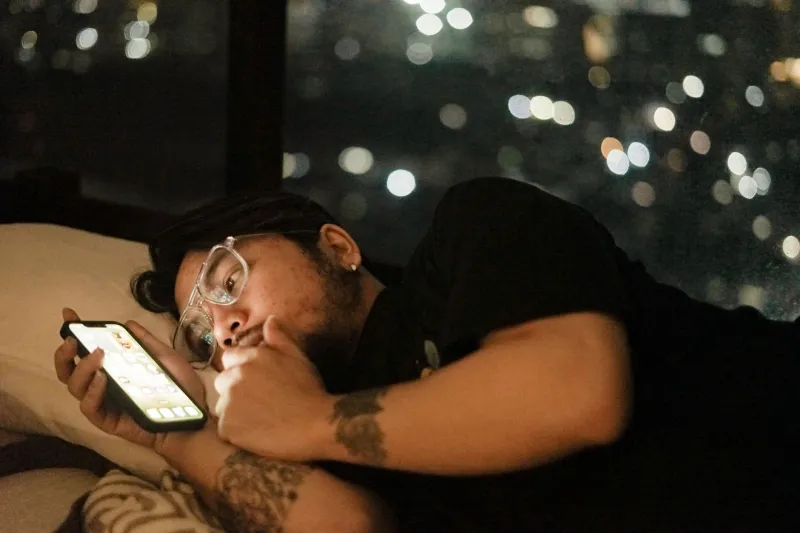
And sometimes, for someone scrolling alone at 2 a.m., eleven seconds of a guy yelling at toast is exactly enough.