Zero Views, Still Posting: The Creators Making Clips for an Audience of Nobody
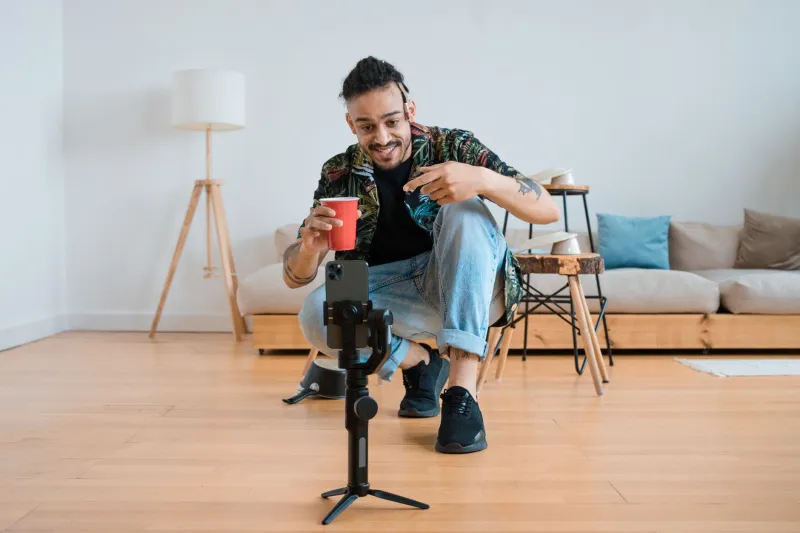
The number sits there like a small, polite rejection: 0 views. Not "under-performing." Not "limited reach." Zero. As in, the algorithm looked at what you made, considered it briefly, and decided that precisely no human being on the platform needed to see it today.
This happens millions of times a day. To real people. Who spent real time making something. And then a significant portion of those people — more than you'd expect — open the app again the next morning and make another one.
This is a story about them.
The Math Nobody Talks About
The creator economy narrative has a very specific shape: scrappy unknown posts clip, clip explodes, brand deals materialize, book deal follows, Netflix eventually calls. It's a good story. It's also, statistically, roughly as common as getting struck by lightning while holding a winning lottery ticket.
The reality of short-form platforms is a distribution curve so steep it borders on vertical. A tiny fraction of content captures the overwhelming majority of views. The middle tier — clips that get a few hundred views, maybe a few thousand — represents a genuinely difficult place to exist, because it's just visible enough to feel meaningful but not visible enough to generate any real momentum.
And then there's the bottom: the videos that register nothing. That get served to a handful of accounts, bounce off without engagement, and quietly stop being shown to anyone at all. The platform's algorithm is not cruel about this. It's just efficient. It moves on.
The creators often don't.
What It Actually Feels Like
Talking to low-view creators — a group that is, by definition, not famous, which means finding them requires some actual effort — reveals a psychological experience that doesn't fit neatly into either "inspiring underdog" or "sad cautionary tale."
It's more complicated than either.
"The first time I got zero views on something I worked on for two days, I genuinely felt embarrassed," says one creator in the Midwest who makes short cooking clips with an average viewcount somewhere in the double digits. "Embarrassed for myself, which is insane, because nobody saw it. That's the whole point — nobody saw it. But I still felt it."
This is a recurring theme: the emotional response to public invisibility that somehow still feels like public failure. The post exists on a platform designed for audiences. The absence of an audience reads, neurologically, as rejection — even when the rational brain understands it's closer to a tree falling in a forest with no one around.
Other creators describe something more detached. A woman in Atlanta who posts daily 15-second motivational clips to an audience of approximately 200 followers — most of whom she suspects are bots — describes her relationship with view counts as "genuinely over it in a way that took about a year to achieve."
"I stopped checking," she says. "Like, literally stopped. I post, I close the app. If someone comments I'll see it eventually. But the number stopped meaning anything to me once I figured out what I was actually doing it for."
What is she doing it for? She pauses for a long time before answering.
"I think I'm practicing being a person who finishes things."
The Mythology of Virality Is Doing Real Damage
Platforms have a vested interest in the viral success story. It keeps creators creating, which keeps content flowing, which keeps users scrolling, which keeps advertisers paying. The occasional rags-to-riches clip discovery functions as a kind of lottery advertisement for the entire ecosystem: look what happened to her, it could happen to you, keep posting.
What this mythology obscures is the genuine labor that disappears into the void every single day. Short-form content looks effortless almost by design — the best clips feel spontaneous, casual, like someone just happened to catch something real — but the creation behind them frequently isn't. Lighting setups. Multiple takes. Editing passes. Audio fixes. Text overlays. Thumbnail selection. All of this work, for a product that might be consumed in eight seconds by fourteen people and then algorithmically buried.
Labor economists who study the creator economy have started using the term "invisible work" to describe this phenomenon: productive output that generates no measurable economic return and receives no social recognition because it never reaches an audience large enough to validate it. The work happened. It just happened in a room where nobody came.
But Here's the Part That Actually Gets Interesting
When you spend enough time talking to zero-view creators, something unexpected emerges: a lot of them are fine. Not in a "coping" way. Actually fine.
Some have reframed the entire exercise in ways that bypass virality as a metric entirely. A retired teacher in Ohio posts daily 30-second nature clips — birds, mostly — with an average of 11 views per video. He has been doing this for two years. He has no intention of stopping.
"I used to keep a journal," he explains. "This is just a journal that occasionally someone else reads. The fact that almost nobody reads it doesn't make it not a journal."
A college student in Texas posts short original music clips that consistently land under 50 views. She describes the process of making and posting them as "the only part of my week where I'm not trying to be good at something for someone else's benefit."
A father in New Jersey makes 20-second clips of his kids doing ordinary things — eating breakfast, arguing about cartoons, falling asleep in weird positions — and posts them to an account his extended family mostly ignores. He has 34 followers. He's made over 400 clips. "These are for them when they're older," he says. "The views don't matter. The archive does."
Redefining Success in a Platform That Doesn't Want You To
The platforms themselves are not designed to help you feel good about 12 views. Every metric, every notification, every comparison feature is calibrated to make you want more — more views, more followers, more reach. The entire interface is built around the implicit assumption that growth is the point.
But the creators posting into the void are quietly running a different experiment: what happens if you use a platform designed for audiences to do something that doesn't actually require one?
The answers vary. Creative practice. Personal documentation. The discipline of finishing. Connection with a small community that actually knows you rather than a massive one that doesn't. Processing grief, or joy, or the specific mundane texture of a life that nobody else would find particularly interesting but that feels worth recording anyway.
None of this is what the platform was designed for. All of it is happening on the platform constantly, invisibly, in the enormous shadow cast by the content that actually performs.
The Clip That Nobody Saw
There's something almost radical about making something and releasing it into a system that ignores it, and then doing it again. Not because you've given up on being seen, necessarily, but because you've separated the making from the metrics in a way the platform would prefer you didn't.
The zero-view clip still exists. Someone made it. It took time and a little courage to post, even if the courage required was just the willingness to be ignored.
In an attention economy that treats invisibility as failure, that might be the most countercultural thing happening on the internet.
Post your clip. Zero views or ten million. The BlipSnips ethos has always been that the small stuff matters — and it turns out, sometimes the smallest audience of all is just you.