Sound Off, Scroll On: The Silent Clip Is 2026's Loudest Attention Hack
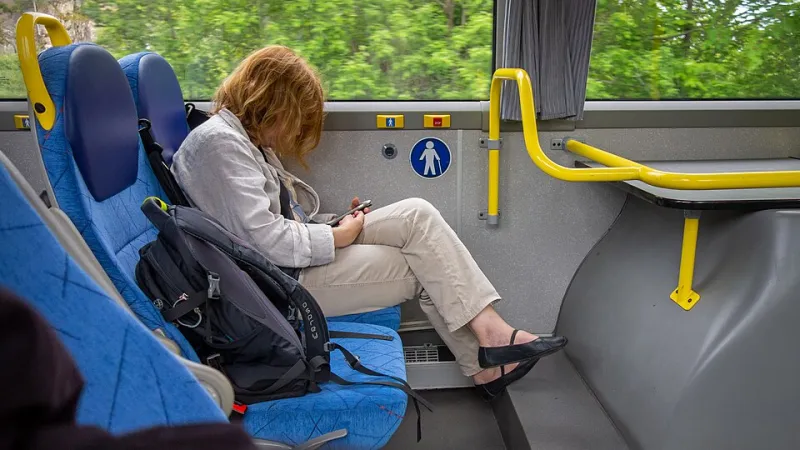
Photo: W.carter, CC BY-SA 4.0, via Wikimedia Commons
There is a specific kind of quiet on the 6:47 a.m. L train. It is not peaceful. It is forty strangers, each watching a different 30-second clip with the sound off, thumbs hovering like tiny traffic cops. Somewhere in that silence, a creator is winning.
The mute button used to be where comedy went to die. In 2026, it is where short-form video goes to get discovered. The clips racking up shares in crowded subways, open-plan offices, and 1 a.m. bedrooms are increasingly built to work with no audio at all. No voiceover. No trending song. Just a face, a caption, and a visual joke that lands before the next stop.
The Subway Test
If you have ever watched a clip on a train and forgotten your phone was muted, you have taken the subway test. The best silent clips pass it in the first second. A hand enters frame. A dog looks guilty. A caption reads, 'He thinks I do not know.' You are in. No sound required.
For creators, this is a design constraint with teeth. Autoplay often starts muted. Public spaces punish audio. Open-plan offices treat a sudden laugh track like a fire alarm. A clip that needs sound to make sense is asking the viewer to do extra work. In a feed where the next swipe is always easier, extra work is a death sentence.
Captions Are the New Soundtrack
The caption used to be an afterthought, the thing you added because someone said accessibility matters. In 2026, it is the soundtrack. Creators write scripts like subtitles: short, punchy, timed to the frame. A pause becomes a beat. A caption that lands one second late is a missed drum fill.
This has changed the comedy. A deadpan line in text can be funnier than a shouted voiceover, because the viewer reads it in their own internal narrator. A caption that says 'I am fine' while a ceiling fan slowly falls behind someone is doing three jobs at once: dialogue, punchline, and setup. The mute button did not kill audio. It promoted text.
Accessibility Grew Up and Got Funny
Silent, caption-first clips are a gift to Deaf and hard-of-hearing viewers, to people in noisy kitchens, to anyone learning English, and to the vast majority of us who simply cannot risk another meeting interruption. But the interesting shift is that accessibility is no longer a compliance box. It is a creative style.
Creators are using captions to add subtext rather than transcribe. They label sounds: [distant lawnmower], [suspicious silence], [cat judging me]. They color-code speakers. They let text do the heavy lifting while the visuals stay weird and minimal. The result is a clip that works in a library, on a plane, and in a group chat at 2 a.m. That is not a niche. That is the default.
The Anti-Audio Aesthetic
Some creators have gone further and made silence the bit. A 12-second loop of someone organizing a drawer. A satisfying before-and-after with no music. A recipe where the only text is 'trust me' and 'oh no.' These clips are not quiet because the creator forgot to add sound. They are quiet because quiet is the mood.
The anti-audio aesthetic is a reaction to the maximum-volume feed. Trending sounds are efficient, but they are also exhausting. They arrive with a built-in expiration date. A silent clip can travel further because it does not depend on a song license, a regional trend, or a sound that will feel embarrassing by Friday. It just needs to look right.
What Creators Are Learning
The playbook is shifting. Hook visually in the first 1.5 seconds. Put the key information on screen before the viewer's thumb gets twitchy. Use captions for personality, not just information. Design for rewatch, because silent clips are easy to replay in a waiting room. And always ask: if this were muted, would it still make sense?
That last question is now a quality filter. Some of the best creators post a sound-on version for the fans and a sound-off version for the algorithm. The clips that survive both are the ones that feel intentional rather than stripped.
The Limits of Silence
Silence is not a universal solvent. Music-driven trends still need music. A funny voice can be the entire joke. A tearful story clip may lose its power when reduced to text. The point is not that every clip should be silent. The point is that muted-first is now the baseline expectation, and sound is the bonus.
That is a quiet revolution, which is appropriate. In 2026, the loudest thing a short-form clip can do is work when nobody can hear it.